
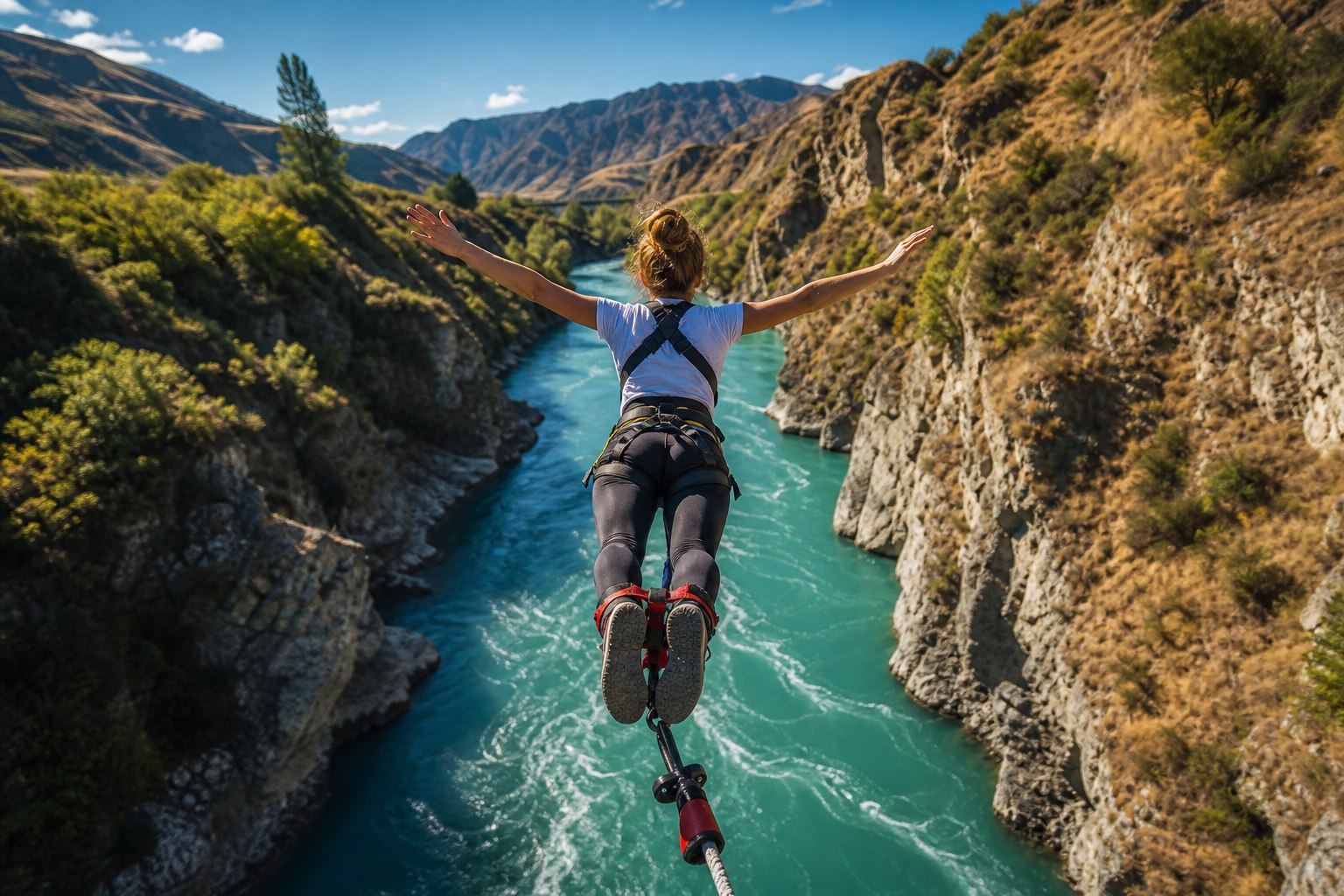
New Zealand did not invent adrenaline, but it certainly turned it into an industry. The first commercial bungee jump in the world opened over the Kawarau Gorge in 1988, and the country has been collecting heart-rate-raising activities ever since. The mix of dramatic landscape and a small population means that the queues are short, the operators are obsessive about safety, and you can do three different sports before lunch if you really want to.
Here is a tour of the adventure sports that put this country on the map, with notes on where to do them and what to expect.
Bungee Jumping
Queenstown is still the spiritual home of the bungee. Kawarau Bridge, the original site, offers a forty-three-metre jump over a clear green river. For a bigger thrill, the Nevis Bungee plunges you 134 metres from a cable car suspended over a remote canyon. Auckland also has a bridge jump and a tower jump, and the Mokai Gravity Canyon in the central North Island offers an eighty-metre swing if free-falling is not enough.
What to expect: an hour-long check-in, a careful harness fitting, a quick weight check written in marker on the back of your hand, and a thirty-second window where you stand on the platform and decide whether to look down.
Skydiving
Skydiving over Lake Taupo, Lake Wanaka, or the Bay of Islands gives you sixty seconds of free fall and a glide back to earth with views that other countries would charge double for. Most operators run tandem jumps from twelve thousand or fifteen thousand feet, with optional video and photo packages.
Tip: choose the morning slot. The wind picks up later in the day, and afternoon jumps are more often cancelled because of weather.
Heli-Skiing and Snowboarding
Between June and October, the Southern Alps become one of the great heli-skiing destinations in the world. Operators based in Wanaka, Queenstown, and Methven fly experienced skiers to untouched powder runs at altitudes of two thousand metres and above. Even if heli-skiing is beyond your budget or skill level, the lift-served fields at Cardrona, Treble Cone, the Remarkables, and Mount Hutt are world-class and far less crowded than the equivalents in Europe or North America.
Beginners can take a half-day lesson at Coronet Peak in the morning and be on intermediate runs by afternoon. Bring a warm waterproof jacket regardless of the forecast – alpine weather changes quickly.
Jet Boating
The jet boat, with its shallow draft and ability to spin a 360 in less than a boat length, was invented by Christchurch engineer Bill Hamilton in the 1950s and is now a national pastime. The Shotover Jet in Queenstown threads through sheer canyon walls at eighty kilometres an hour, while the Dart River boat trip near Glenorchy combines high-speed runs with stops in the lush native forest of Mount Aspiring National Park.
On the North Island, the Huka Falls Jet runs right up to the base of the country’s most powerful waterfall. Wear sunglasses to keep the spray out of your eyes.
White Water Rafting and Kayaking
Rivers like the Kaituna near Rotorua include a seven-metre waterfall, the highest commercially rafted waterfall in the world. The Tongariro and the Rangitikei offer scenic full-day trips through gorges that you cannot reach any other way. South Island rivers like the Buller and the Landsborough run wild and require a higher level of skill.
If a paddle in your hand sounds appealing but you prefer flatter water, the Abel Tasman coastline is one of the gentlest and most photogenic sea kayaking destinations in the world.
Caving and Black Water Rafting
Glowworms turn the limestone caves of Waitomo into a starlit ceiling. The Black Abyss tour combines abseiling, zip-lining underground, and floating through chambers on an inner tube. Allow a full day and bring a change of dry clothes.
Mountain Biking
New Zealand has built a remarkable network of bike trails over the past fifteen years. The Old Ghost Road and the Heaphy Track on the South Island and the Timber Trail in the central North Island are multi-day cross-country rides. The Whakarewarewa Forest in Rotorua is one of the world’s best lift-served mountain bike parks, with two hundred kilometres of trails graded from beginner to expert.
Practical Tips Before You Book
- Most operators have weight, age, and health restrictions. Read the fine print before paying a deposit.
- Travel insurance with adventure-sport coverage is a small expense compared to a helicopter rescue.
- Combine activities through operator group deals – AJ Hackett, for example, bundles bungee, swing, and zipline products at a discount.
- Book ahead for the popular sites in peak summer and ski season; same-day spots vanish quickly.
- Listen carefully during the safety briefing, even if it sounds rehearsed. The operators have done thousands of these trips and know exactly what to do.
Whether you finish the day buzzing from a freefall or quietly satisfied after a long bike ride, New Zealand has a way of nudging you into trying something new. If you would rather pair the adrenaline with calmer moments, our overview of vacations in New Zealand shows how to balance the active days with rest.