
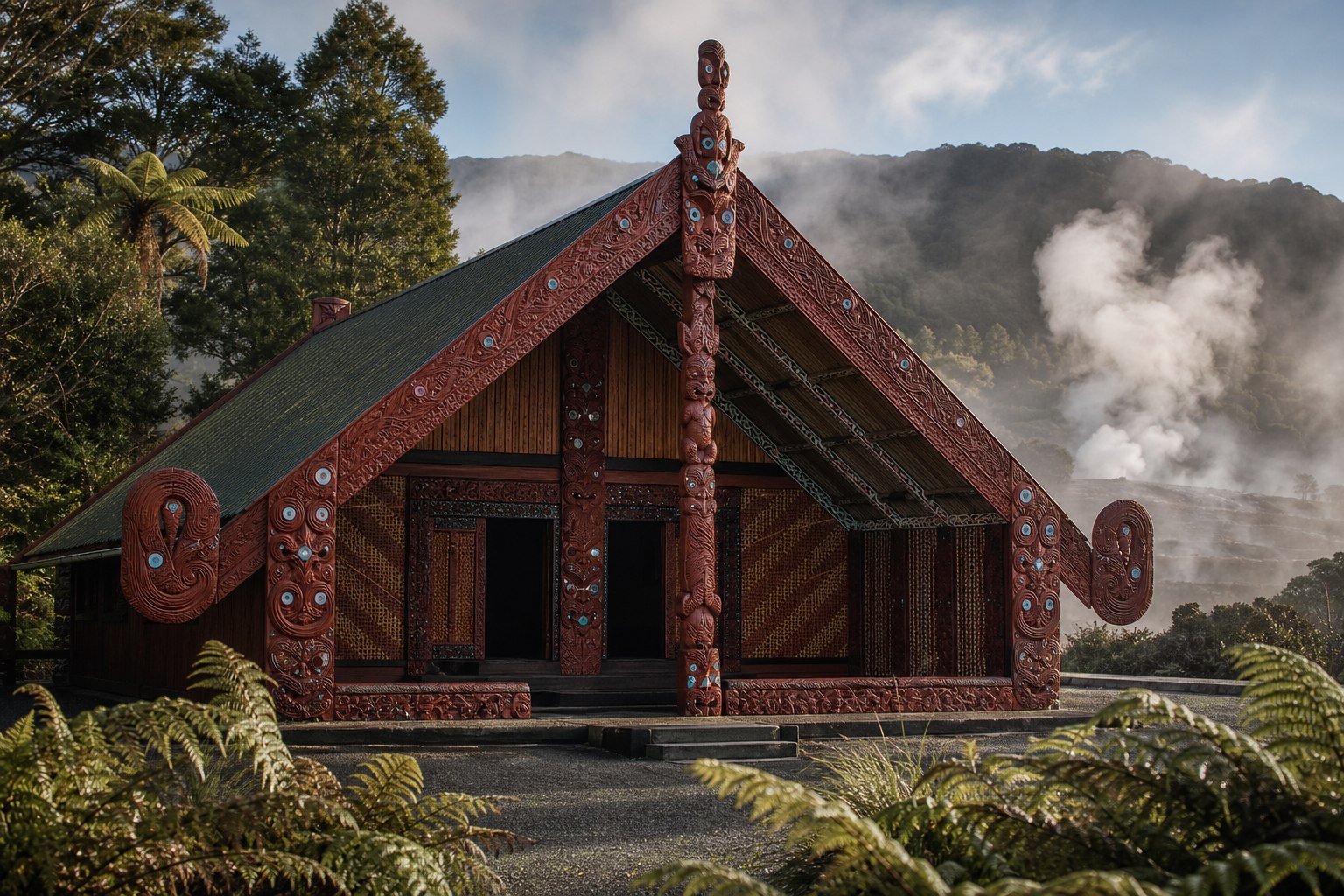
To visit New Zealand without taking the time to understand Maori culture is to see only half the country. The Maori arrived on these islands from Polynesia roughly seven hundred years ago, and their language, art, customs, and worldview shape modern New Zealand in ways that go far deeper than the haka before an All Blacks match. Whether you have a single afternoon or a full week, here is how to meet that culture with respect and curiosity.
A Very Short History
Maori voyagers crossed thousands of kilometres of open Pacific Ocean in twin-hulled waka (canoes) and made landfall in Aotearoa, the long white cloud, around the late thirteenth century. Over the centuries they developed distinct iwi (tribes) and hapu (sub-tribes), each with their own ancestral lands, songs, and stories. The signing of Te Tiriti o Waitangi in 1840 between Maori chiefs and the British Crown remains the foundation document of modern New Zealand and is still actively interpreted in courts and parliament today.
Rotorua: The Heart of Maori Tourism
If you have time for only one cultural stop, make it Rotorua on the central North Island. The city sits over a geothermal field, and steam from natural vents rises from gardens, parks, and even car parks. The local Te Arawa people have lived alongside this landscape for centuries and have shaped the most accessible cultural experiences in the country.
Te Puia is the best-known cultural centre, combining a geothermal valley, a working carving and weaving school, and a kiwi conservation enclosure. An evening visit to Tamaki Maori Village or Mitai gives you a hangi (an earth-oven feast), a marae welcome, and live performance of waiata (song), poi, and haka. Choose one option, slow down, and listen rather than just snap photographs.
Visiting a Marae
The marae is the heart of Maori community life. It is a meeting ground centred on the wharenui, the ornately carved meeting house that represents an ancestor. Walking onto a marae is a privilege, not a tourist activity, and almost always requires an invitation or a tour led by mana whenua (people of the land).
If you are welcomed onto a marae, you will encounter a powhiri, a ceremony of welcome that includes calls between the host and the visiting party, speeches in te reo Maori, and the hongi – a gentle pressing of nose and forehead. Take your shoes off before entering the wharenui, follow the lead of the people hosting you, and ask before taking photographs inside.
Where to See Maori Art
Modern Maori artists are some of the most exciting voices working anywhere in the Pacific. Auckland Art Gallery Toi o Tamaki, Te Papa Tongarewa in Wellington, and the Christchurch Art Gallery all hold strong collections of historic and contemporary Maori work. Look out for the carvings of Lyonel Grant, the photographic portraits of Fiona Pardington, and the lush feather cloaks (kakahu) that anchor most national exhibitions.
For a different angle, head to the East Cape, where small communities along the coast have produced generations of master carvers and weavers. Many studios open their doors to visitors by appointment.
Learning a Little Te Reo
Te reo Maori is an official language of New Zealand and is enjoying a strong revival. You do not need to be fluent to be polite, but a handful of phrases will be appreciated wherever you go.
- Kia ora – hello, also a way of saying thank you or agreeing
- Tena koe / tena korua / tena koutou – greeting one person, two people, or three or more
- Ka pai – well done, good
- Ko wai to ingoa? – what is your name?
- No reira – therefore, and so (often used to close a speech)
- Aroha – love, compassion, often used as a goodbye in writing
Beyond Rotorua
Cultural tourism has grown well beyond the centre of the North Island. In Northland, Waipoua Forest is home to Tane Mahuta, the giant kauri tree that local Maori guides will tell you about by lantern light at dusk. In Kaikoura, on the South Island, the local Ngati Kuri people run whale-watching trips guided by traditional knowledge. In Taranaki, the rebuilt Parihaka community offers a powerful and quieter look at the history of nonviolent resistance.
Respect Is the Whole Point
The best Maori cultural experiences are the ones where you arrive ready to listen. Do not touch carvings unless invited. Do not sit on tables, because food and the head are separate concepts in Maori thinking. Do not interrupt a speaker on a marae, even if you do not understand the language. The reward for paying attention is a country that suddenly feels far richer and more layered than the postcards suggest.
By the time you leave, you will have a different sense of what it means to stand on this land. For more ideas on how to weave culture into a wider trip, our piece on why you should visit New Zealand covers the broader picture.